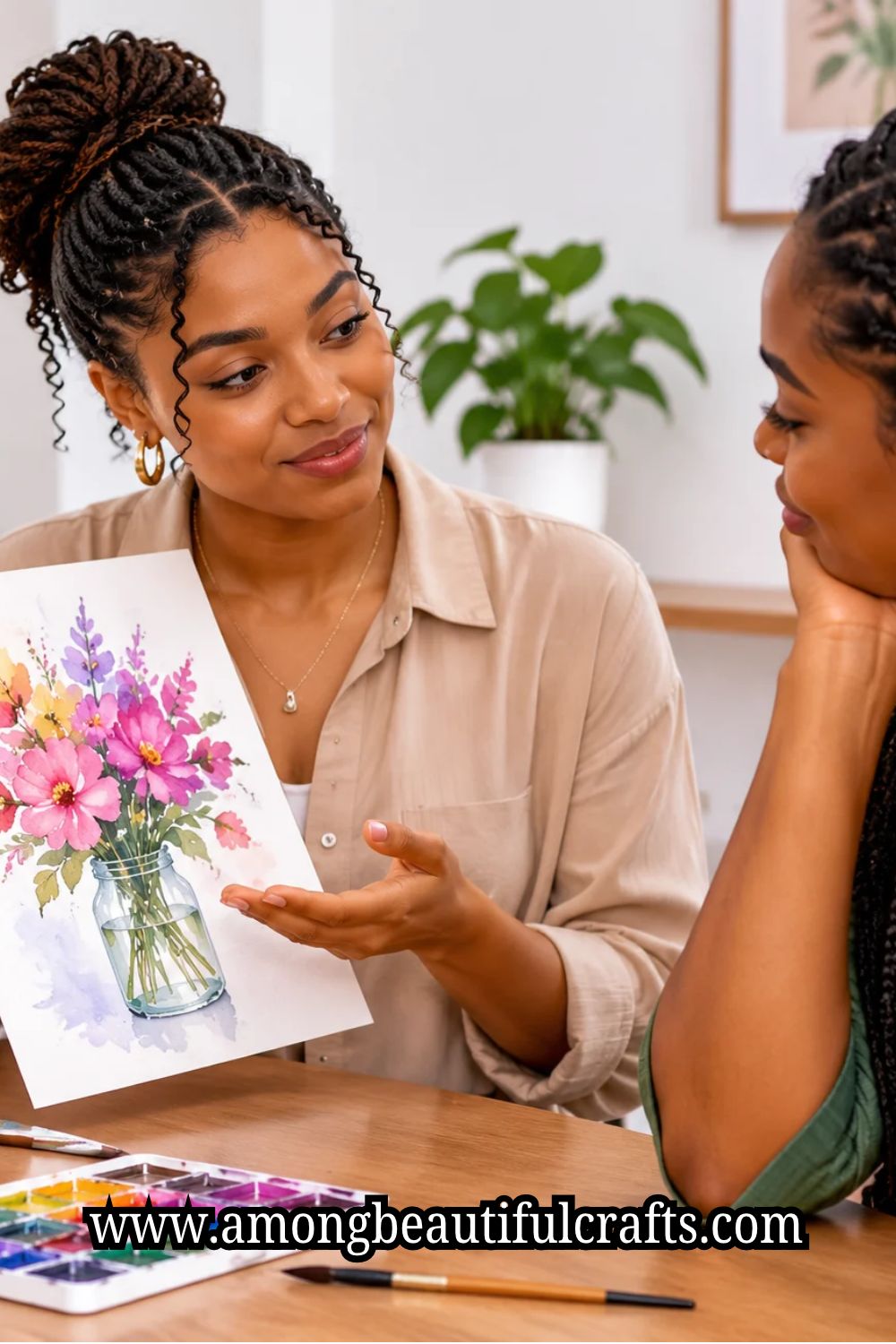
Sometimes you just want to paint something nice without spending an hour figuring out what to paint.
You sit down with your paper, brushes, and paints, then the blank page starts looking a little too serious.
Having a few Watercolor Painting Ideas in mind makes that first step much easier.
You can pick one, get your colors ready, and start painting instead of staring at the paper.
And honestly, your first painting does not need to be a big project. You might paint a tiny vase of flowers, a colorful fruit, or even a few clouds.
Small subjects give you a chance to enjoy the process without worrying about getting every little thing right.
Once you finish one, you may find yourself wanting to try another instead of putting your paints away.
That is what you will find in this list. These ideas look lovely, but they still give a beginner something they can actually handle.
Some take only a few colors and simple brushstrokes. Others give you a little more room to practice.
You can copy the idea, change the colors, or take one small part of it and turn it into your own painting.
29 Beginner-Friendly Watercolor Painting Ideas That Look Amazing – (Click Here to Shop Watercolor Paint Set on Amazon)
1. Simple Sunset Over the Water
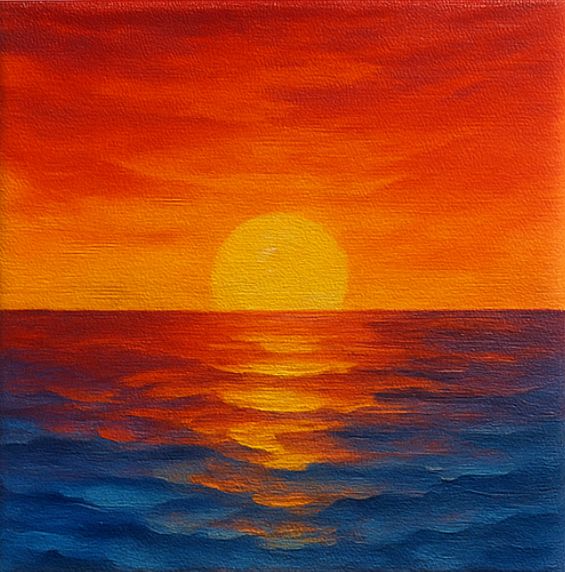
A sunset is one of those paintings that can look much more complicated than it really is.
Start with a pale yellow near the horizon. Slowly work upward with orange, pink, and a little purple.
Keep the colors slightly wet as you move from one shade to another. This helps them blend without leaving harsh lines.
For the water, repeat the same colors in loose horizontal strokes. Add a dark shoreline or a tiny tree at the bottom if you want more contrast.
Keep those details small so the sky stays the main focus.
2. Little Jar of Wildflowers
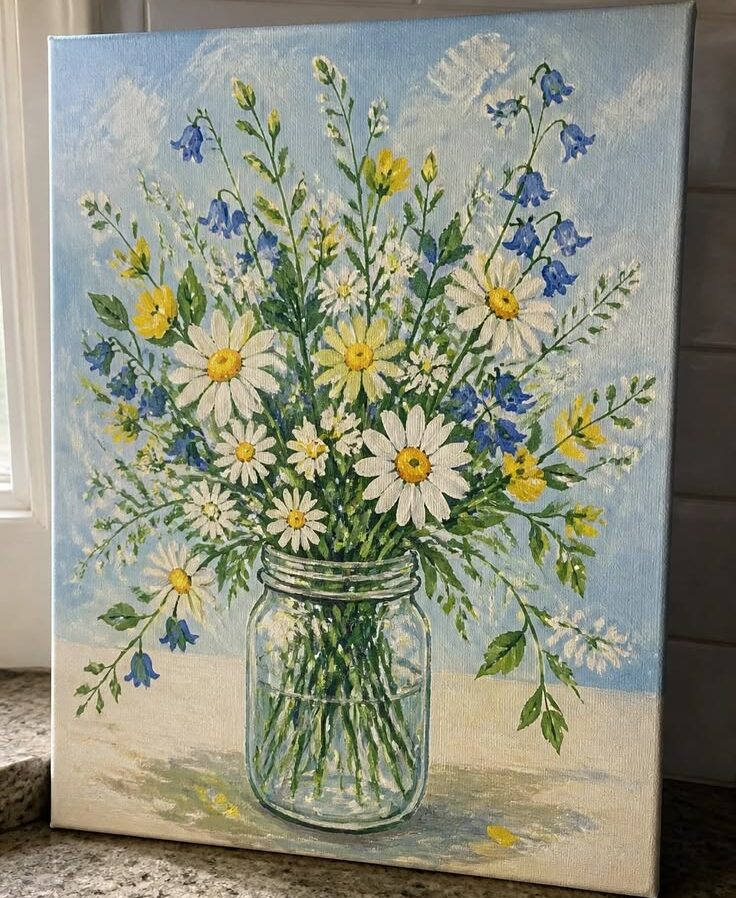
You do not need to paint every flower perfectly. In fact, loose flowers often look better for this kind of picture.
Paint a small glass jar or simple vase first. Then add thin green stems that spread in different directions. Place tiny dots, short strokes, and loose petals at the ends.
Try using three or four flower colors instead of covering the page with every shade in your palette. A little white space around the flowers will also make the painting feel lighter.
3. Watercolor Lemons
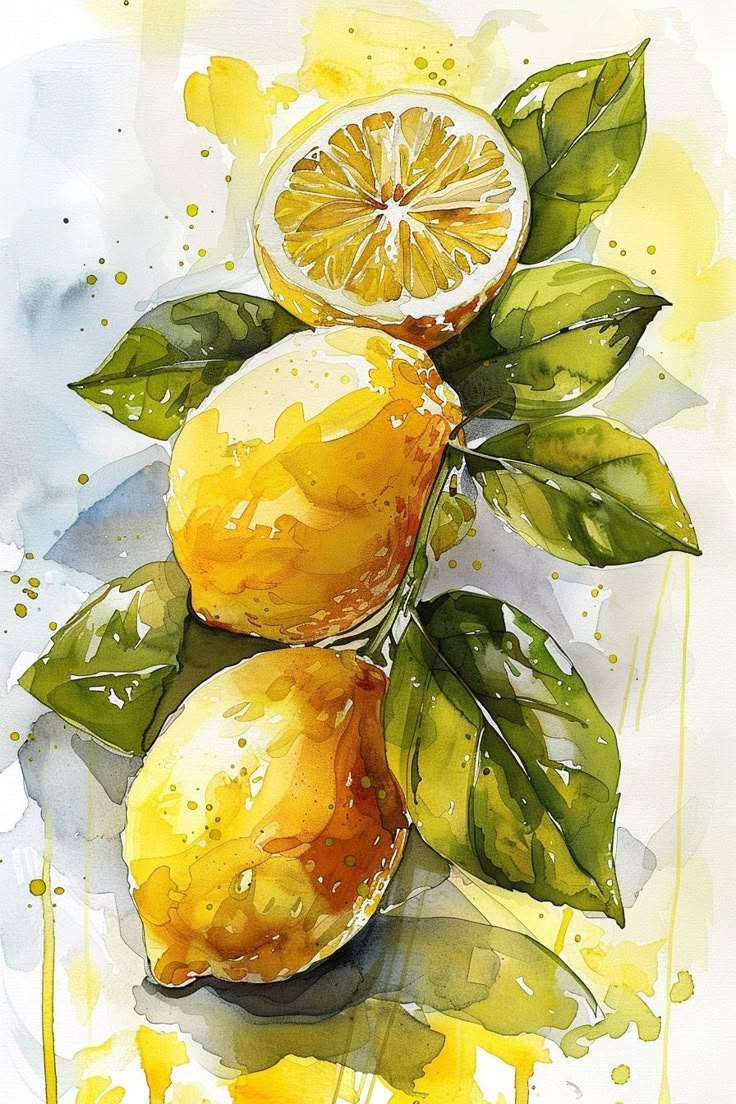
Lemons give you a bright subject with a very simple shape. Start with a loose yellow oval and leave a tiny area lighter to suggest where the light hits.
Add a warmer yellow or a touch of orange around the edges. Then use a small amount of green for the leaves.
You can paint three lemons together, stack them in a little bowl, or leave one cut open.
The cut lemon makes a fun practice piece because you can paint the pale center and small sections inside.
4. Cozy Cup of Tea
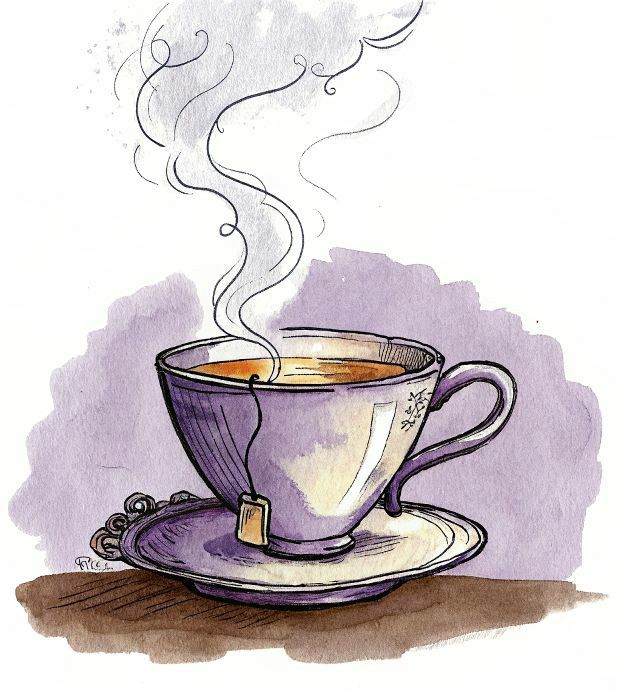
A little cup can turn into a charming kitchen painting with only a few shapes.
Sketch the cup lightly, then paint the main body with a soft color. Add a darker shade along one side and underneath the rim.
Keep the handle simple instead of trying to make it perfectly even.
For a cozy touch, place a few loose steam lines above the cup. You can also add a tiny spoon, a tea bag, or a couple of flowers beside it.
5. Moon Behind the Clouds
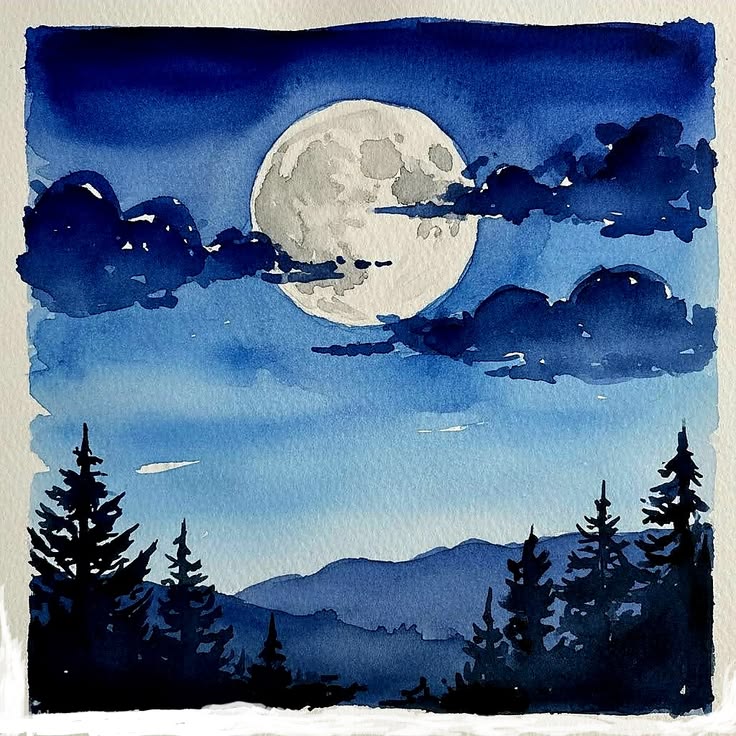
This makes a lovely night painting without requiring much detail.
Cover the paper with a dark blue or purple wash, then let it dry. Add a pale circle for the moon and place a few soft clouds around it.
The clouds do not need sharp edges. Use a damp brush to soften some areas so they look like they are moving across the moon.
Finish with a few tiny stars. Leave plenty of dark space around them so they stand out.
6. A Tiny House in the Hills
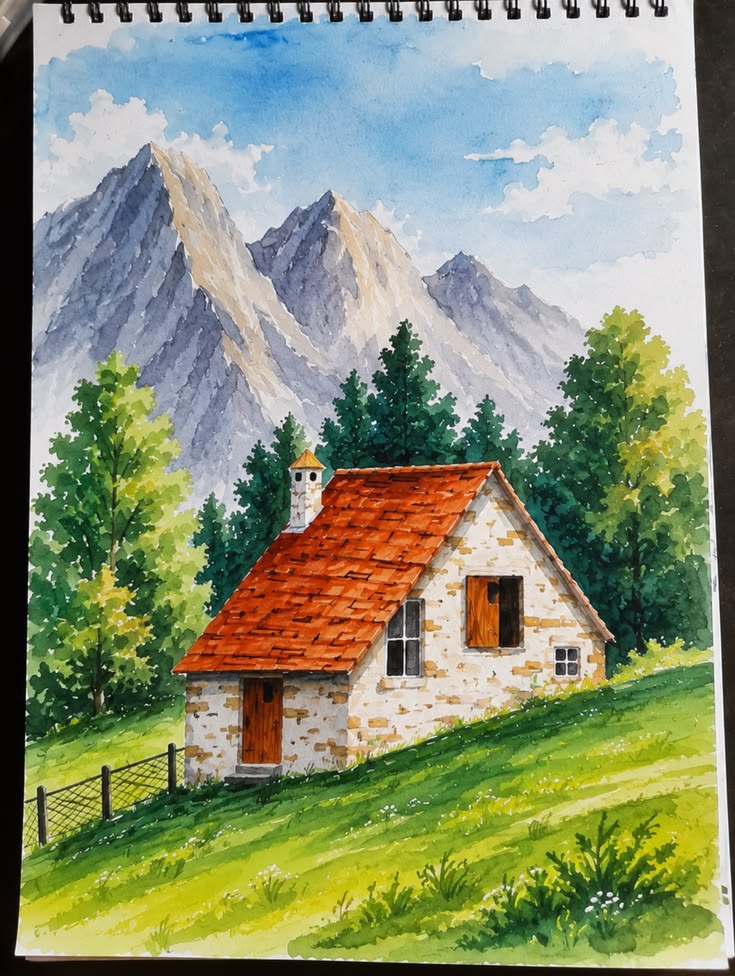
Paint two or three soft hills across the bottom half of your paper. Use lighter colors for the hills in the distance and slightly darker colors for the ones in front.
Then add one small house. You only need a rectangle, a roof, a door, and a couple of windows.
A thin chimney with a little smoke can make the scene feel lived-in. Add a few trees around the house, but keep them loose.
The small details should support the scene rather than take over.
7. Loose Lavender Stems
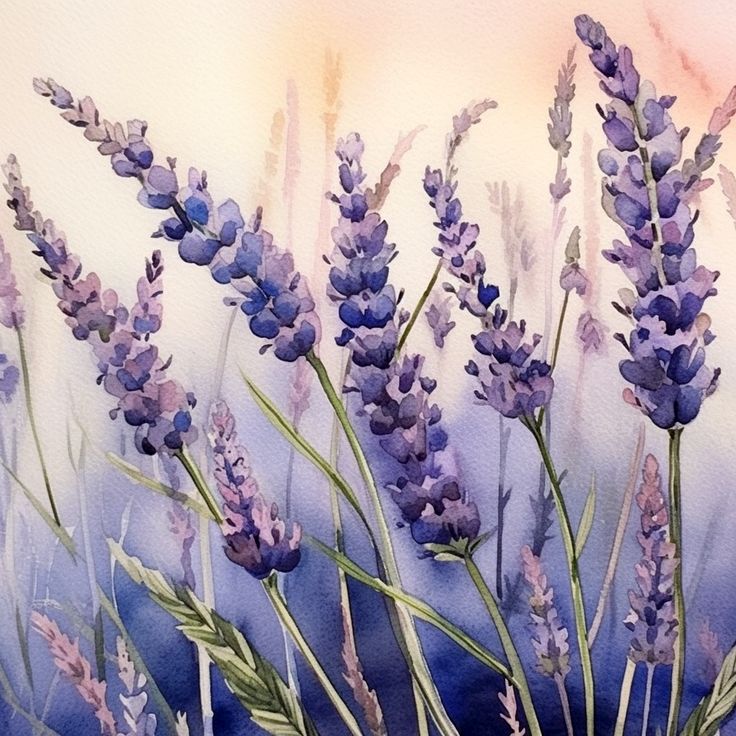
Lavender is perfect when you want to practice loose painting.
Use a thin brush to paint several slightly curved green stems. Then add tiny purple marks along each stem. Let some marks stay darker and others remain lighter.
You can bunch the stems together or spread them across the page. A simple cream or pale pink background can make the purple stand out nicely.
This also works well as a small painting for a card or framed artwork.
8. Colorful Mushroom Cluster
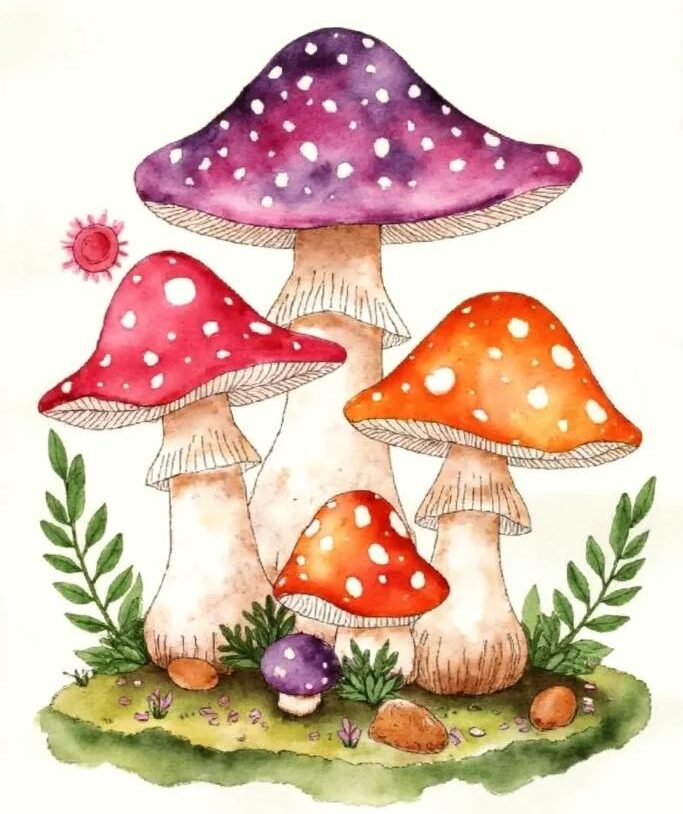
Mushrooms give you several simple shapes to play with.
Paint three or four mushroom caps in different sizes. Try red, orange, brown, cream, or muted pink. Add pale stems underneath and a few small spots on the caps.
Then place the mushrooms among loose grass and tiny leaves. You can make the background almost blank.
The simple shapes mean you can focus more on color and shading.
9. Rainy Window
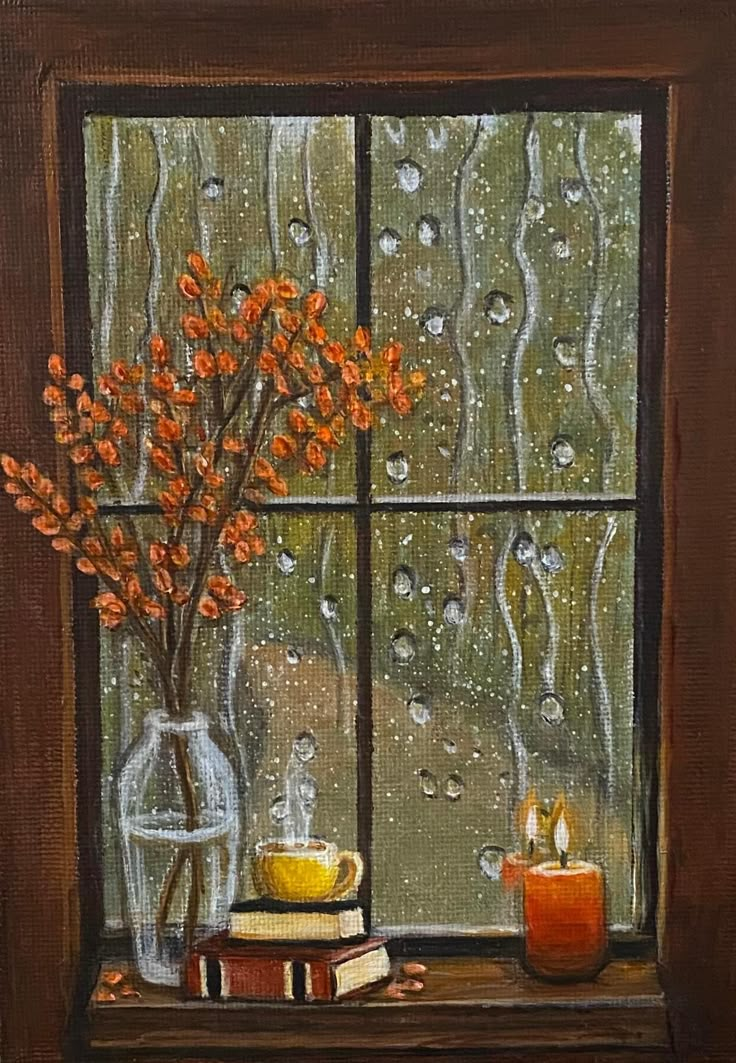
This one gives you a chance to paint an atmosphere instead of a detailed object.
Start with a pale blue or gray wash. Once it dries, add a few darker vertical and diagonal lines to suggest rain running down glass.
Behind the window, paint blurry shapes of trees, buildings, or warm lights. Do not add hard details there. The soft background is what makes the rain feel convincing.
A tiny plant or cup on the windowsill can finish the scene.
10. Watercolor Peaches
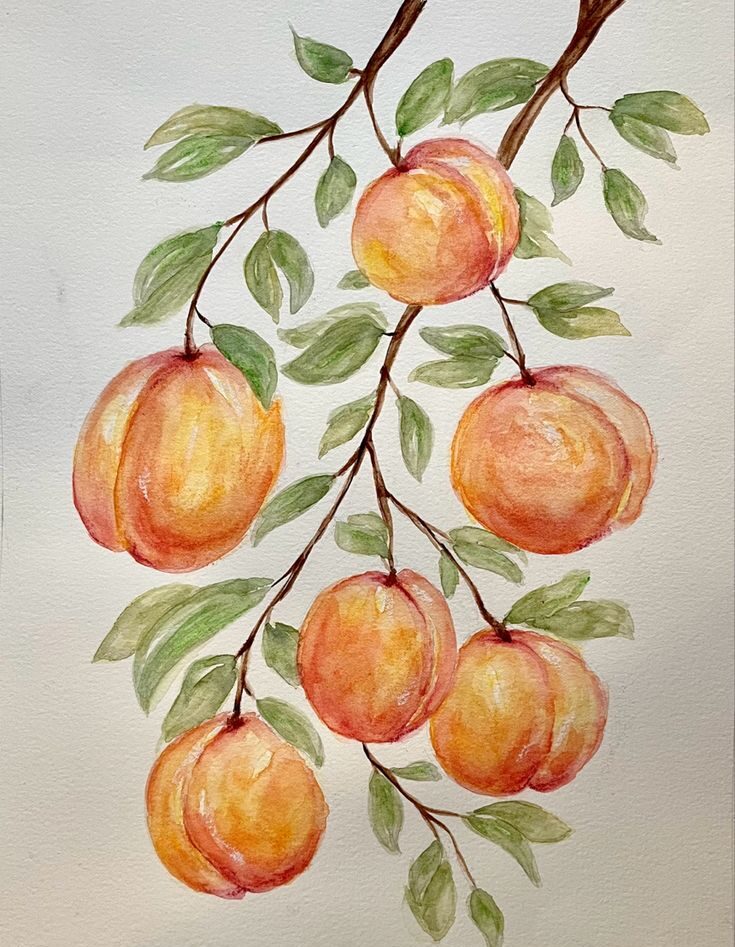
Peaches are forgiving because they already have an uneven, soft shape.
Paint each peach with a warm orange or peach color. Leave a small lighter area on one side. Add a deeper orange around the bottom and one edge.
For the leaves, use a simple mix of green with a little brown. You can place two peaches together or paint one sliced open.
Try letting some of the colors run slightly into each other. That loose effect suits this fruit beautifully.
11. A Beach With Tiny Umbrellas
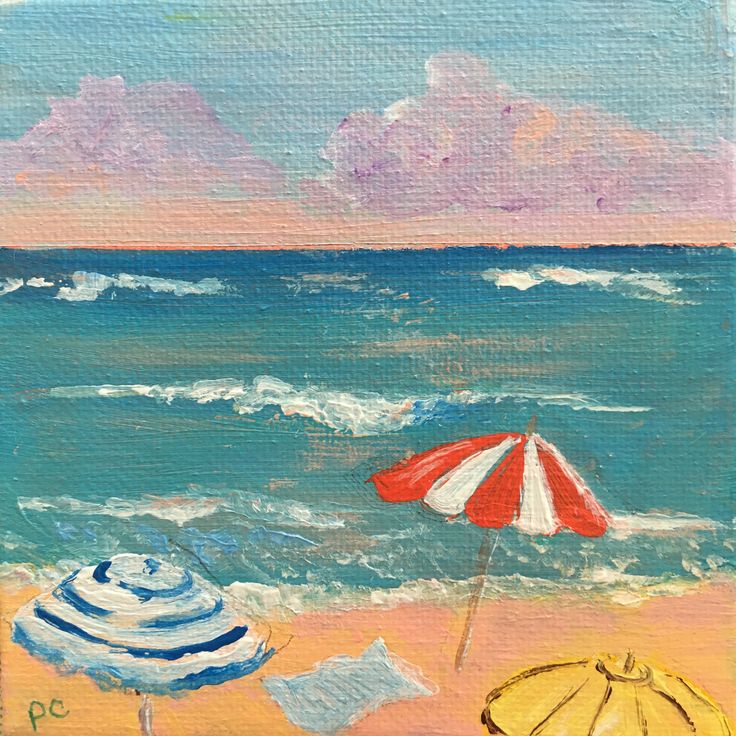
You can create a cheerful beach scene with a few broad sections.
Paint the sky with a pale blue wash. Add a sandy strip near the bottom, then use blue-green strokes for the water.
Once everything dries, add tiny beach umbrellas. Red, yellow, coral, and blue work nicely against the pale background.
Do not worry about drawing people in detail. A few tiny figures can suggest people enjoying the beach without making the painting difficult.
12. Watercolor Houseplants

If you like painting leaves, this is an easy one to keep coming back to.
Choose a simple plant such as a monstera, snake plant, pothos, or small fern. Paint the pot first, then build the leaves around it.
Use different amounts of water to create several shades of green. Add a few darker strokes along selected leaves instead of outlining everything.
You can also paint three tiny potted plants together. Give each pot a different shape for a little variety.
13. Colorful Hot Air Balloon
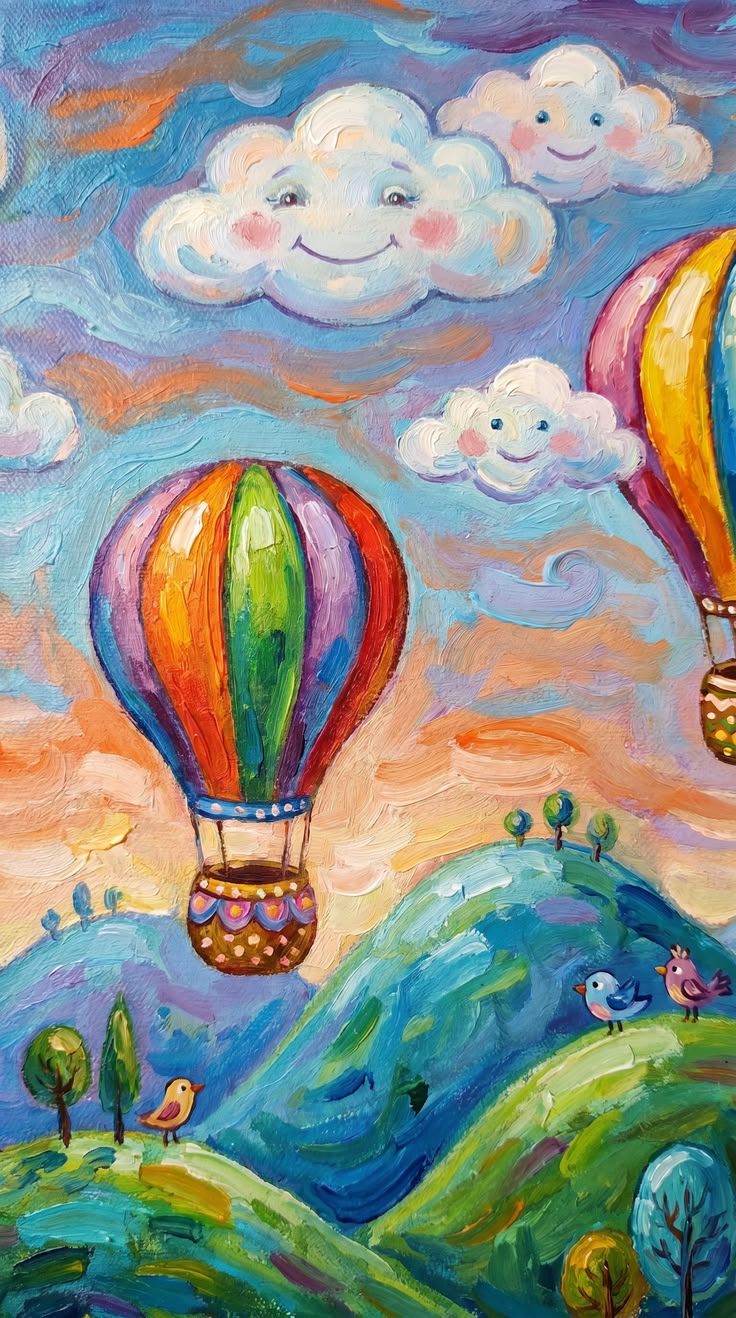
A hot air balloon lets you play with bright colors without needing complicated drawing skills.
Start with the large balloon shape. Divide it into a few curved sections and fill them with different colors.
Keep the colors fairly clean at first. Then add a little darker paint along one side of each section to give the balloon some shape.
Paint a tiny basket underneath and add a few soft clouds around it. The small scale makes the final piece look especially cute.
14. A Simple Mountain Landscape
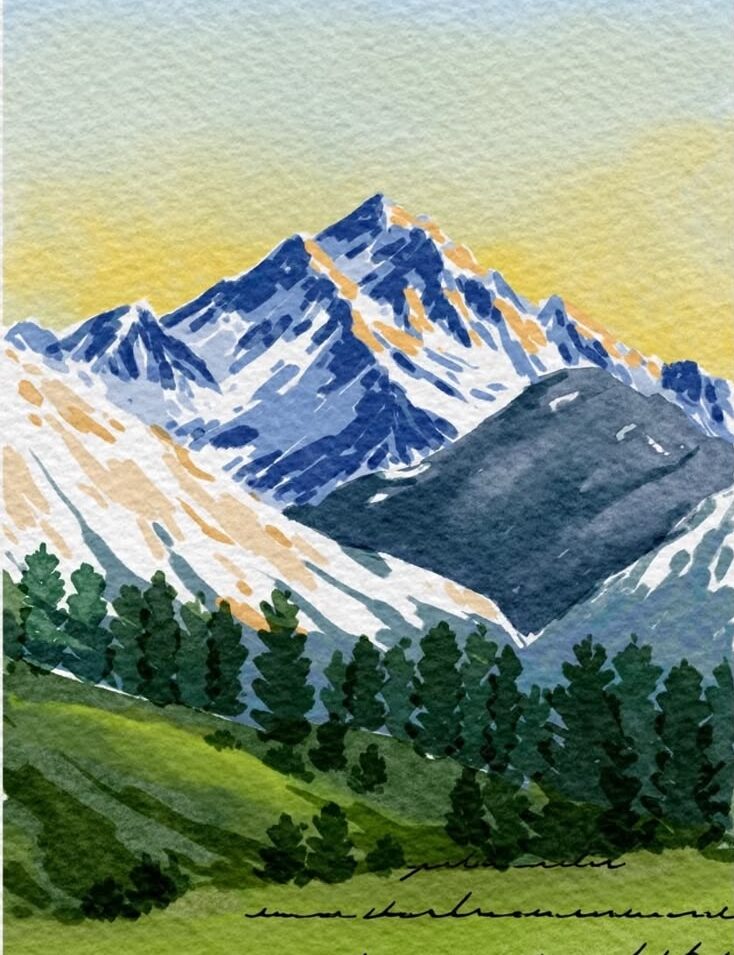
You can make mountains using just a few large shapes.
Paint the farthest mountain in a light blue or purple. Let it dry before adding a darker mountain in front.
At the bottom, add a few loose pine trees or a small lake. You can reflect some of the mountain colors in the water with horizontal strokes.
Do not try to paint every rock or tree. The simple shapes are what give this kind of painting its clean look.
15. Watermelon Slices
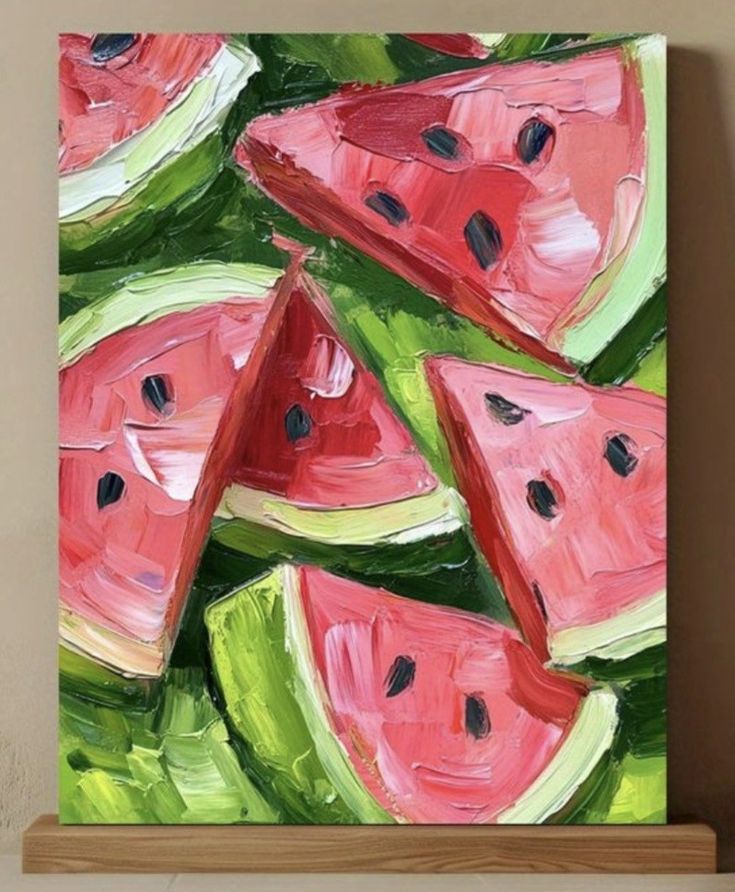
This is a fun choice when you want something colorful and quick.
Paint several triangular watermelon slices using pink or red for the fruit and green for the rind. Leave a narrow lighter area between the colors.
Once the paint dries, add small black seeds. Vary their direction instead of lining them up perfectly.
You can paint the slices on a plain background or scatter them around the page like a little summer pattern.
16. Golden Sunflower
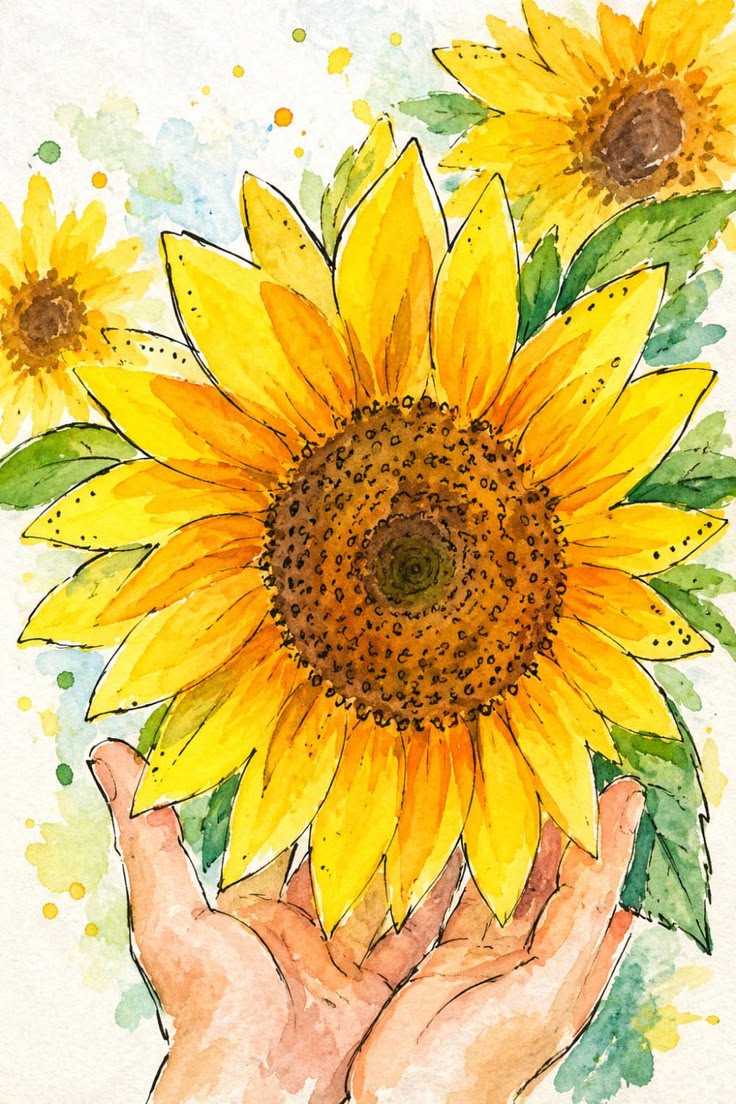
A sunflower gives you a good excuse to play with warm colors.
Start with the center using brown, ochre, or deep orange. Then paint the petals around it with yellow and golden tones.
Do not make every petal identical. Some can be longer, shorter, lighter, or partly hidden behind another petal.
Add a green stem and a couple of leaves. A pale blue wash behind the flower can make the yellow pop without adding much extra work.
17. Little Bird on a Branch
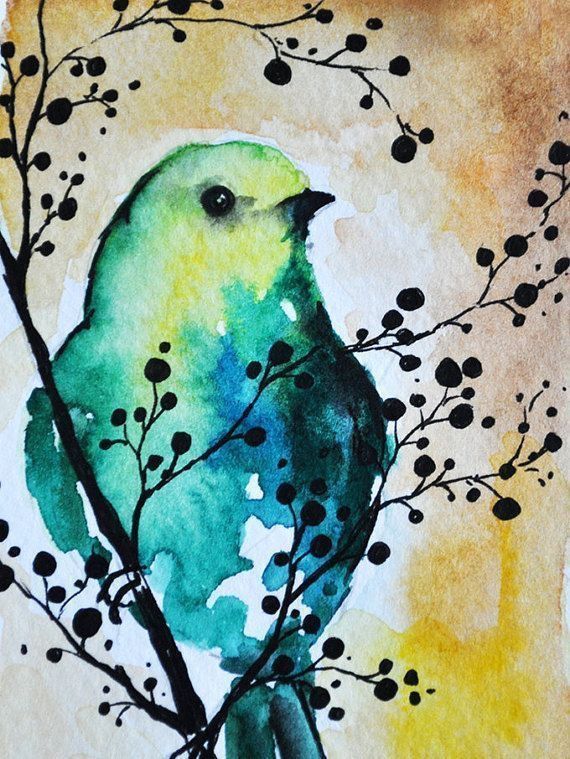
You do not need detailed bird anatomy for this painting.
Sketch a simple rounded bird shape and give it a small beak and tail. Fill the body with one main color, then add a darker shade around the wing and back.
Paint a thin branch underneath and add two or three leaves.
You can change the bird’s colors to create a robin, bluebird, sparrow, or an imaginary little bird. This is one of those paintings where a simple shape can still have plenty of personality.
18. Lavender Field at Sunset
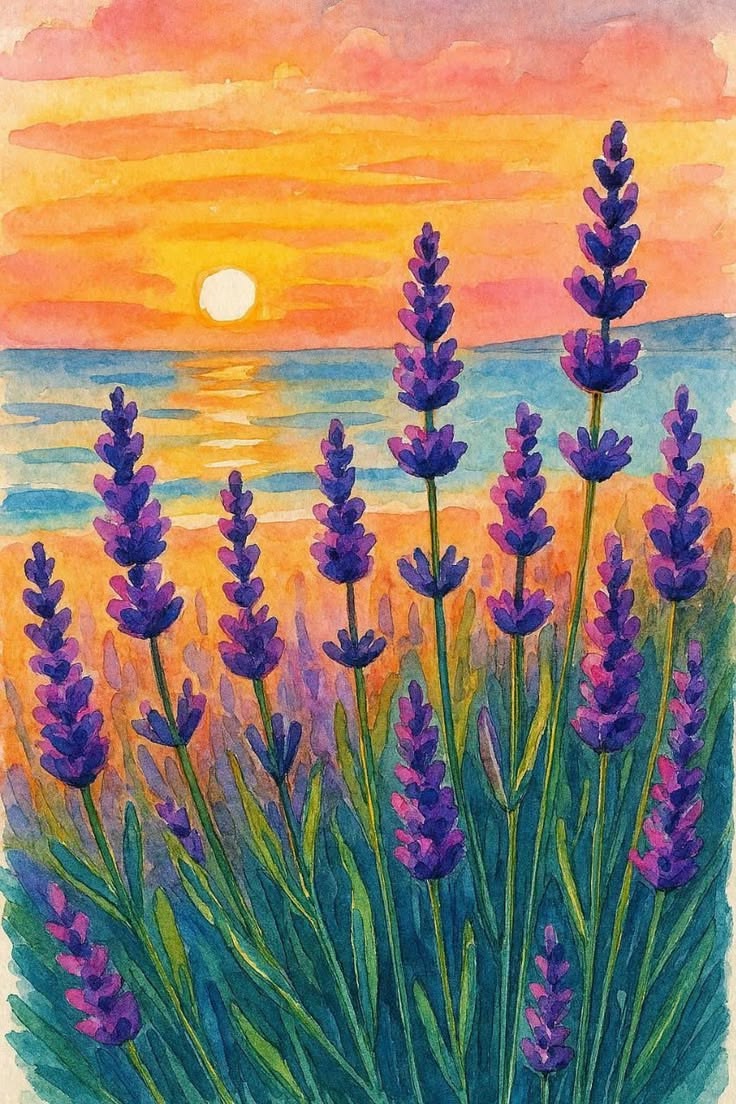
This combines a simple landscape with loose flowers.
Start with a warm sunset sky using pink, peach, orange, or purple. Blend the colors gently while the paper remains damp.
For the field, use rows of purple and green strokes. Keep the distant rows lighter and make the front ones slightly darker.
Add a tiny path winding through the field if you want another focal point. A small person or house in the distance can also give the painting a sense of scale.
19. Autumn Leaves
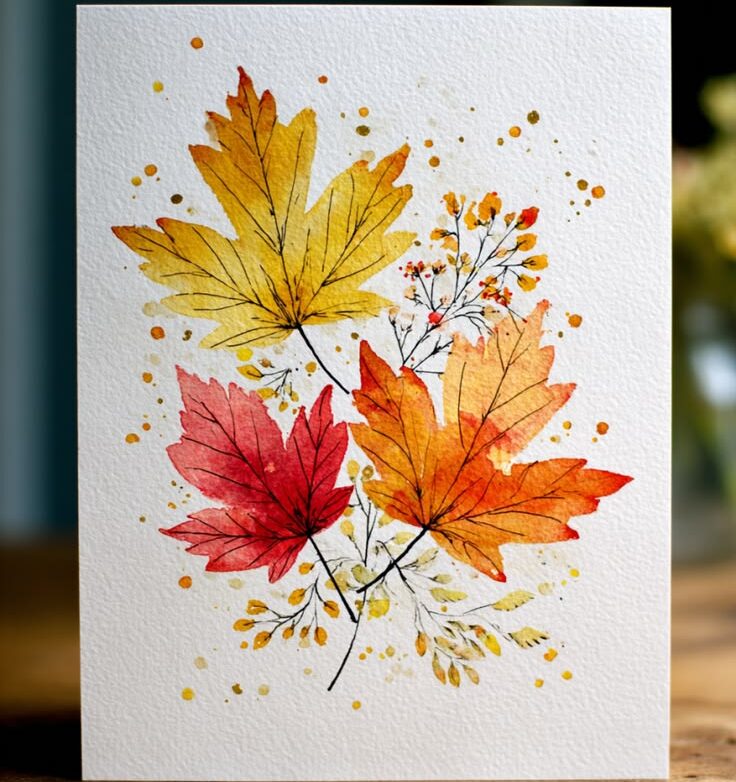
You can make a lovely fall painting without drawing an entire tree.
Paint individual leaves in orange, yellow, red, and brown. Vary their sizes and shapes so they do not look copied.
Add a few thin stems and veins once the main colors dry. You can also let some leaves overlap.
For a different look, paint the leaves falling diagonally across the page. Leave plenty of blank paper around them so the composition does not feel crowded.
20. Night Sky With Tiny Stars
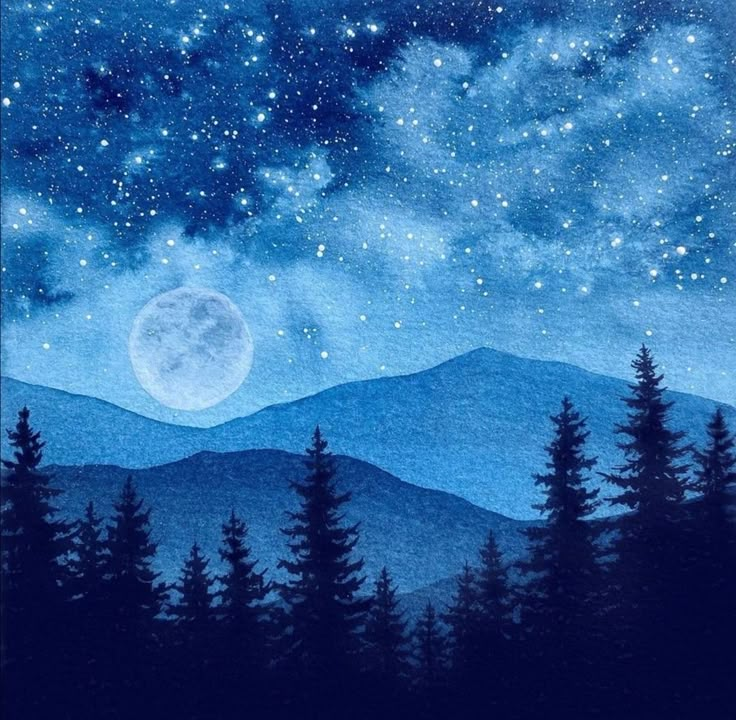
This is a great project when you want to practice a simple wash.
Wet the paper lightly and add dark blue, purple, and a little pink. Let the colors meet and blend across the page.
Allow the paper to dry before adding the stars. Use a small brush to place tiny dots across the darker areas.
You can add one larger star, a crescent moon, or a small hill along the bottom. Keep the extra details limited so the sky stays the star of the painting.
21. Cute Little Cottage
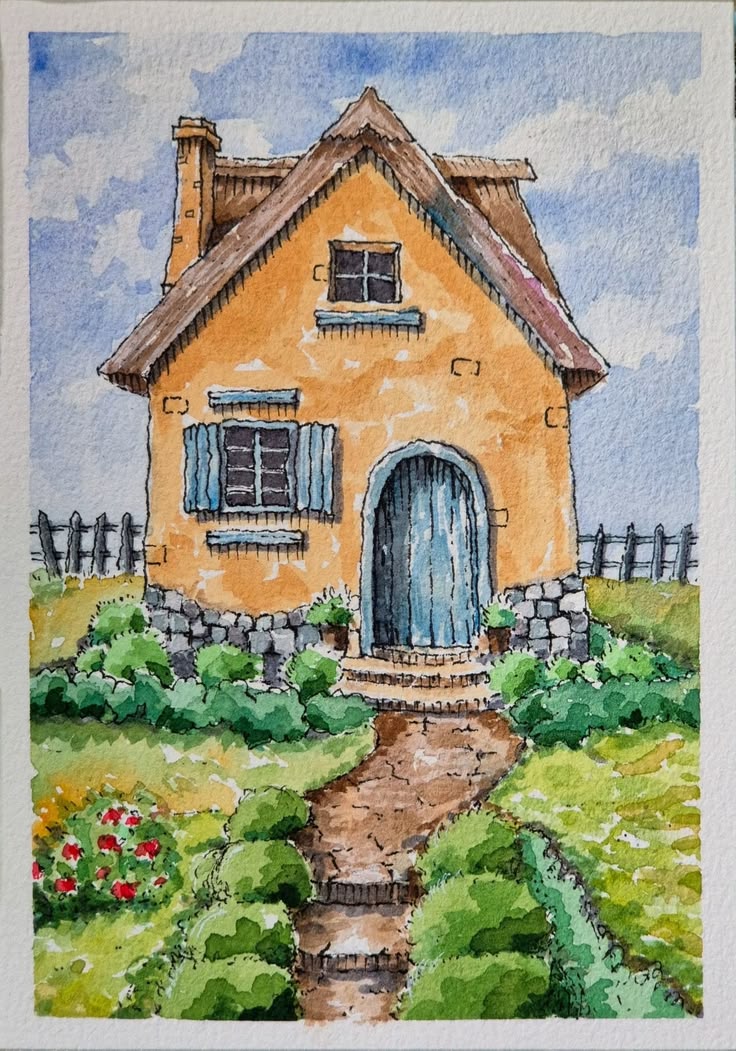
A cottage gives you more detail to practice without needing a complicated scene.
Paint the walls with a warm cream, pale yellow, or light brown. Add a dark roof and a small door.
Around the house, paint flowers, bushes, trees, or a little fence. Keep these details loose and slightly uneven.
That imperfect look can actually make the painting feel more charming. You do not need every window or fence post to line up perfectly.
22. Simple Seashells
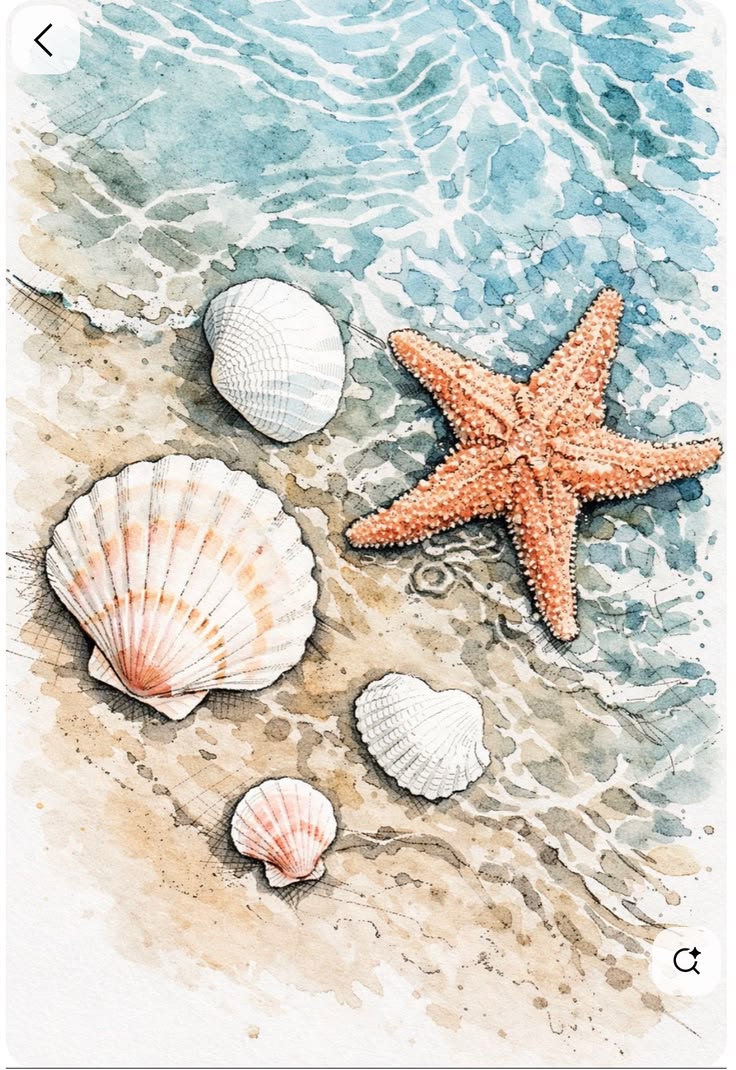
Seashells work beautifully with soft colors and simple shading.
Choose a few shell shapes, such as scallop shells, spiral shells, or small clam shells. Paint each one with a different pale color.
Use slightly darker paint inside the grooves. Keep the outer edges soft instead of outlining every shell.
A little sand underneath can tie the group together. You can also add one tiny starfish for a beachy touch.
23. Rainbow and Clouds
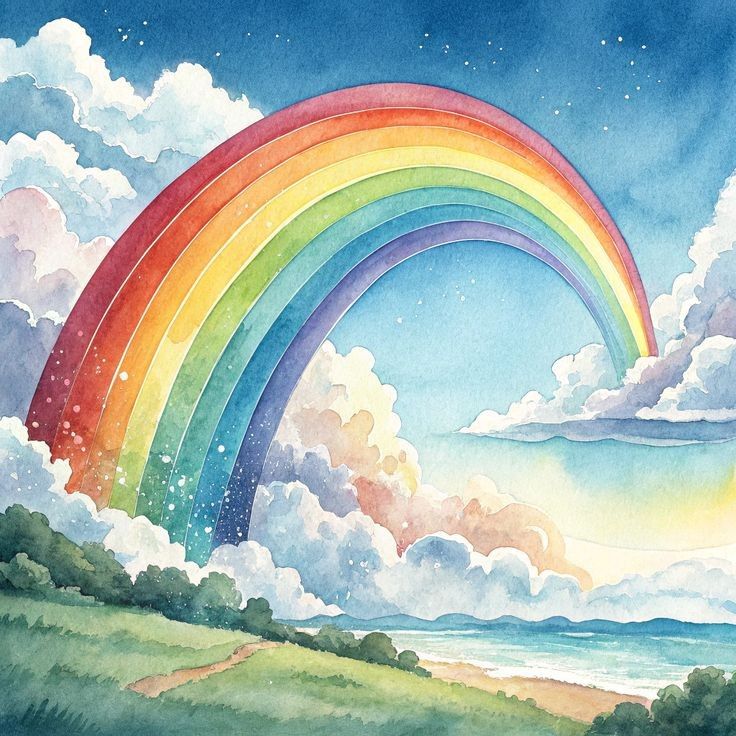
This is a straightforward project when you want to practice clean color placement.
Paint a few soft clouds first using very pale blue-gray or leave parts of the paper completely white.
Then add the rainbow in thin curved bands. Keep the colors bright but slightly transparent so the paper still shows through.
You can place a small hill, flowers, or a house underneath. The simple shapes make this a nice afternoon painting project.
24. Watercolor Butterfly

A butterfly gives you a chance to experiment with symmetry without making the painting too difficult.
Draw the body and wings lightly. Paint one wing first, then use similar colors on the other side.
You can use pink and purple, blue and turquoise, orange and yellow, or any combination you like.
Add a few darker marks near the body and along the wing edges. Keep the center slightly lighter so the wings do not look flat.
25. Little Coffee Shop Window
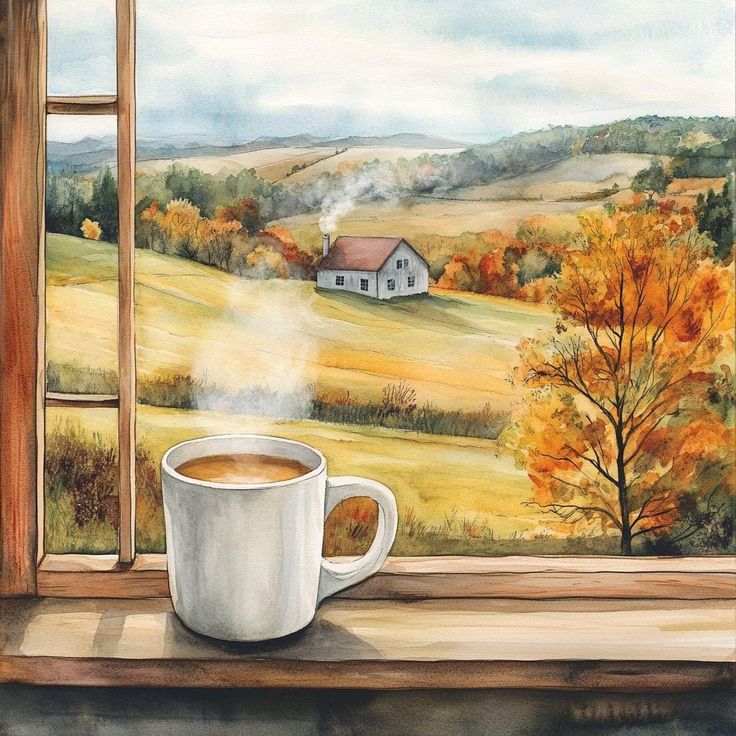
This idea works especially well if you enjoy cozy scenes.
Paint a simple window with a warm yellow glow inside. Add a small awning above it and a couple of flower pots below.
You can suggest tables, chairs, or hanging lights inside without painting every object clearly.
Use darker colors around the outside of the window. That contrast will make the warm center stand out.
26. Simple Ocean Waves
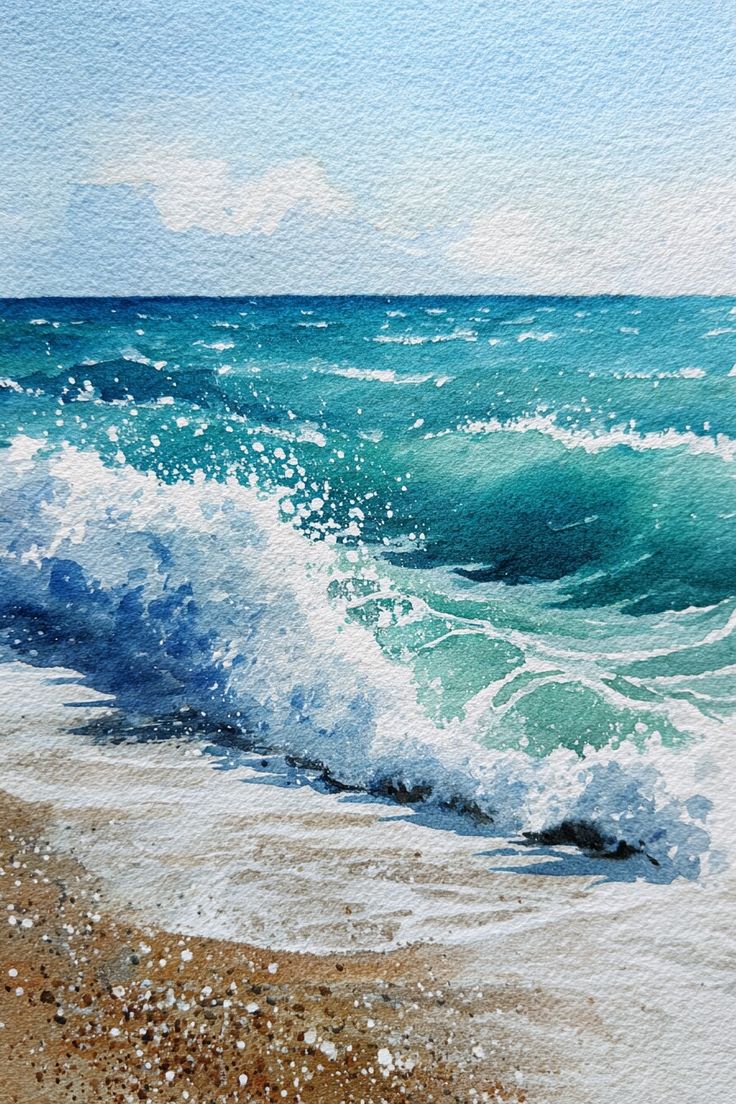
You do not need to paint a whole beach to practice water.
Start with a pale blue wash across the paper. Add slightly darker blue-green areas where the waves gather.
Once the first layer dries, paint loose white or pale strokes across the wave tops. Let some marks break apart instead of making one solid line.
A tiny shell, boat, or distant bird can add interest. Still, the waves should remain the main focus.
27. A Bowl of Fresh Fruit
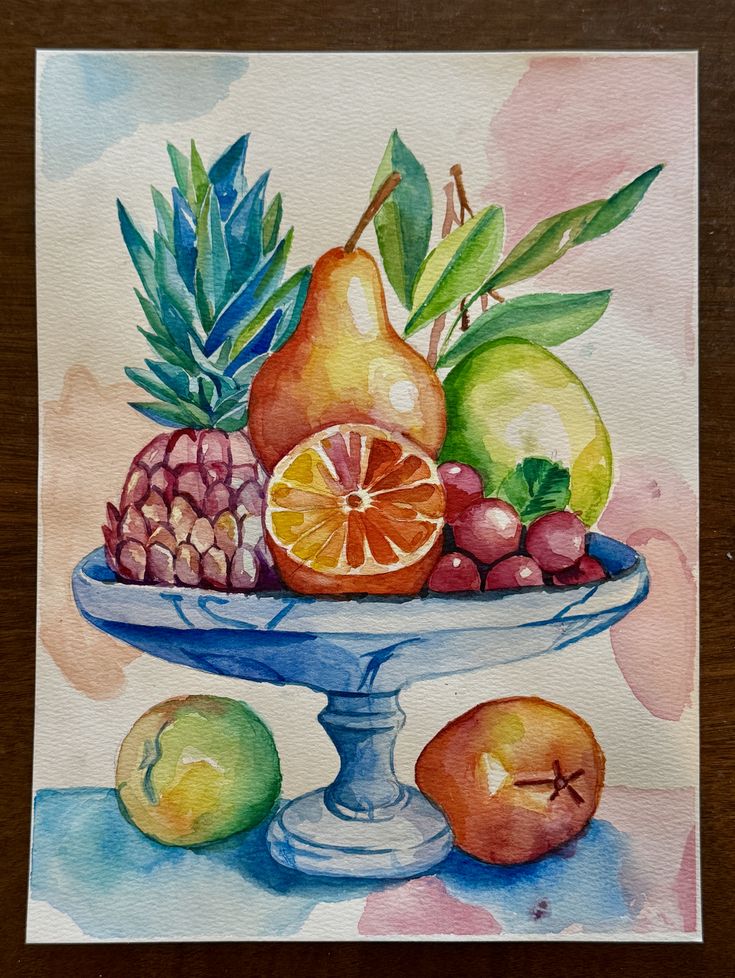
A fruit bowl gives you several easy shapes in one painting.
Draw a shallow bowl and fill it with apples, oranges, pears, or lemons. Keep the fruit slightly overlapping so the arrangement looks natural.
Use a light first layer for each fruit. Then add darker paint along the lower edges and where the fruits touch each other.
The shadows underneath the fruit matter too. Even one soft shadow can make the whole bowl feel like it is sitting on a table.
28. Simple Floral Wreath

A wreath looks detailed from a distance, but you can build one from small repeated marks.
Start with a loose circular guide. Paint small leaves and flowers around the circle, leaving some gaps.
Use two or three main colors and repeat them around the wreath. This helps the design feel connected instead of random.
You can leave the center empty or add a tiny word later if you plan to turn it into a card. The painting also works nicely on its own.
29. Little House Under a Starry Sky
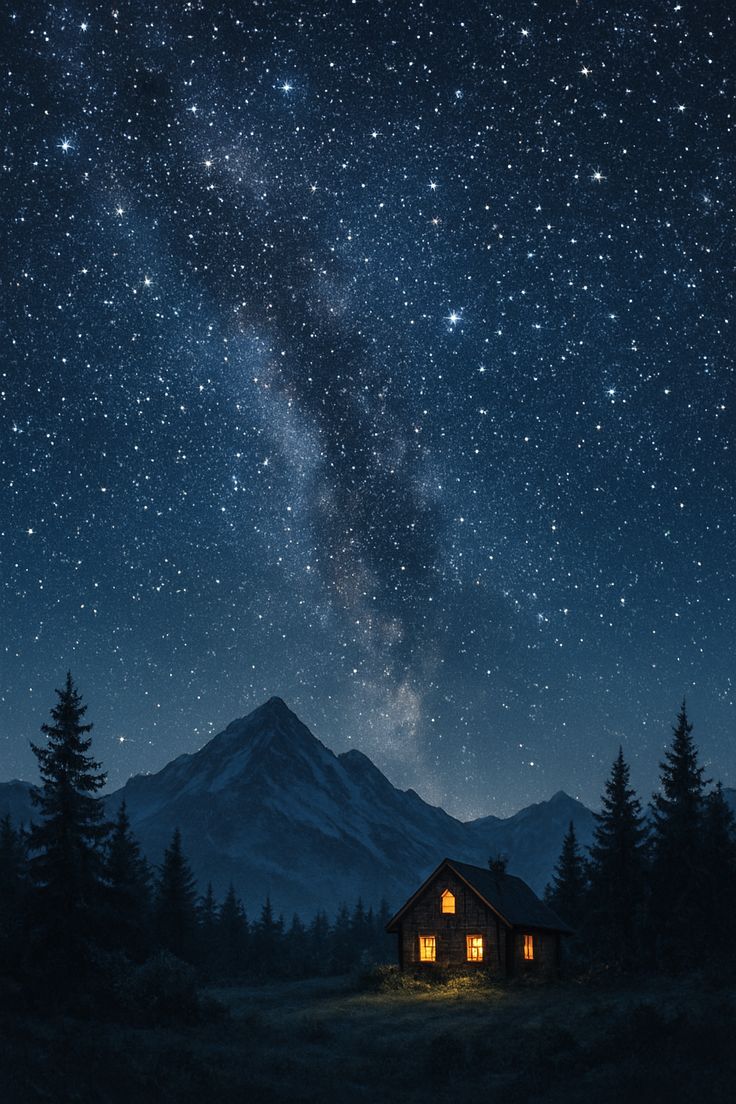
For a final project, bring a few simple skills together. Paint a deep blue or purple sky first. Add a small house near the bottom with warm yellow windows.
Place a few trees around it and add tiny stars above. A little snow or grass can separate the house from the rest of the scene.
The contrast between the dark sky and warm windows does most of the work. You do not need many details to make this painting feel finished.
A Few Things That Make Beginner Watercolor Paintings Easier
The supplies you use can change how much you enjoy painting. You do not need a huge professional set, though.
A small watercolor palette, a few brushes, and decent watercolor paper can take you quite far.
Start with less water than you think
Too much water can send your paint running across the page. That can be frustrating when you are trying to paint a small shape.
Try loading your brush with paint first, then add water little by little. You will quickly notice how the color changes.
Let layers dry
It can feel tempting to keep working while the paper is still wet. Sometimes that gives you a lovely blend. Other times, it turns a clean shape into a muddy patch.
Let the first layer dry when you need a sharper detail. Then add the darker parts on top.
Keep a scrap sheet nearby
Before touching your actual painting, test the color on a spare piece of paper.
You can see how dark the paint looks and how much water sits on the brush. This small habit can save you from making a mark that feels too strong.
Do not outline everything
Beginners often reach for a dark outline because it makes the shape easier to see. Watercolor does not always need that.
Try letting the edge of the paint create the shape instead. Some areas can stay soft while others have sharper edges.
Leave some white paper
You do not need to cover every inch of the page. White space can make flowers, clouds, fruit, and landscapes look lighter. It can also give your eyes somewhere to rest.
Work from light to dark
It is much easier to make watercolor darker than to make it lighter.
Start with a pale layer and build up the color slowly. If you need more depth, add another layer after the first one dries.
Final Thoughts
The nice thing about watercolor is that you can make a painting from almost anything around you.
A cup on your desk, a flower from the garden, a bowl of fruit, or the view from a window can all become a subject.
You do not need an unusual idea before you can make something worth keeping.
These Watercolor Painting Ideas give you a place to start, but you can change almost every part of them.
Make the sunset purple instead of orange. Paint the bird blue. Turn the little cottage into a beach house. Use softer colors if bright ones feel too strong.
Most of all, give yourself room to make a few paintings that do not turn out exactly as planned. That is part of learning.
The more you paint, the less intimidating that blank sheet becomes, and the easier it gets to look at it and simply think, “I know what I want to try.”