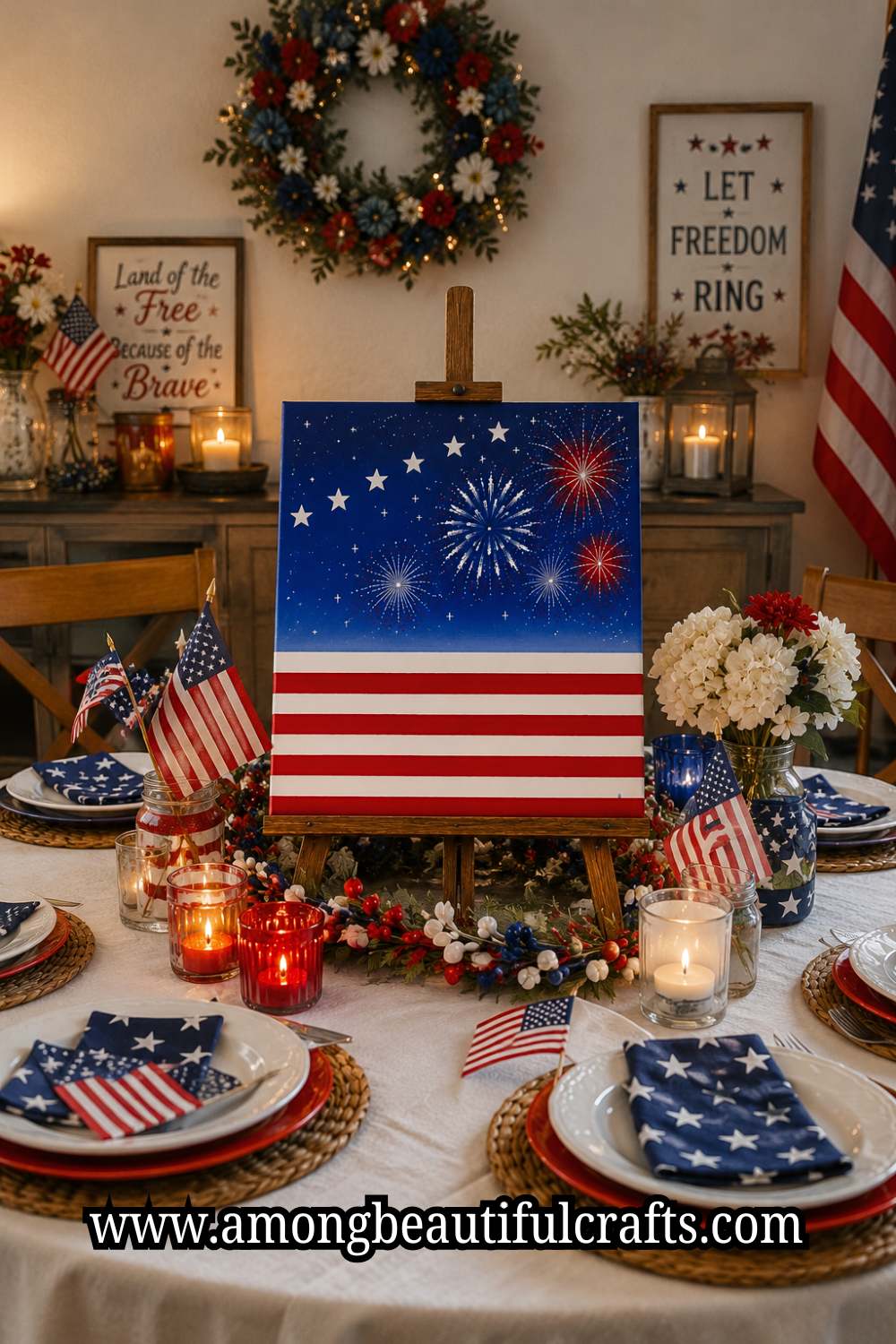
Most people do not plan to spend the Fourth of July painting a canvas. Usually, the day is filled with food, fireworks, music, and trying to stay cool during the summer heat. But honestly, sitting down with some paint and creating something festive can end up being one of the most relaxing parts of the holiday. If you have been wondering how to Paint a Fourth of July Canvas without needing real artistic talent, this beginner-friendly project is a great place to start. It is simple, creative, and designed for regular people who just want to try something new without stressing about being “good at art.”
If you’re looking for additional patriotic decorating inspiration, 23 Red White and Blue Painting Ideas for Your Home This Summer offers plenty of festive ways to bring patriotic color into your living space.
A lot of beginners avoid painting because they assume every canvas has to look professional to be worth making. That really is not true. Patriotic colors already do most of the work for you. Red, white, and blue naturally look bold, bright, and eye-catching together, even in simple designs. A few stars, some stripes, and a fireworks burst can turn a blank canvas into something that feels festive and surprisingly impressive. The goal is not perfection. The goal is to enjoy the process and make something you feel proud to display.
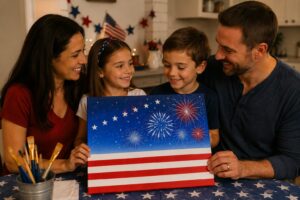
The best part is that you do not need expensive supplies or years of experience to make this work. Acrylic paint is beginner-friendly, mistakes are easy to fix, and simple brushstrokes often end up looking better than expected. This guide breaks everything down step by step so the process feels easy instead of overwhelming. By the end, you will have a handmade Fourth of July decoration that feels personal, creative, and genuinely fun to make.
What You Will Need
Before starting, gather all your supplies first. Having everything ready makes the whole painting process feel smoother and much less stressful once the paint comes out.
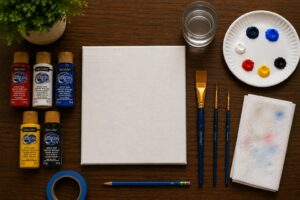
Here is what you need:
- A blank canvas (11×14 or 12×12 works perfectly for beginners)
- Acrylic paint in red, white, blue, yellow, and black
- One wide flat paintbrush
- Two smaller detail brushes
- Painter’s tape
- A pencil
- A cup of water
- Paper towels or an old cloth
- A paper plate or paint palette
It is also a smart idea to wear old clothes because acrylic paint dries quickly and can stain fabric permanently. Covering your table with newspaper or an old towel helps make cleanup easier afterward too.
How to Paint a Fourth of July Canvas Without Artistic Experience
Step 1 : Paint the Background
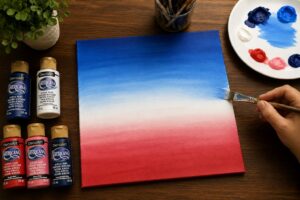
The background is easily the least stressful part of the entire project. There are no details to worry about yet, which helps you settle into the process and relax a little. Using your wide flat brush, paint the top half of the canvas blue with smooth side-to-side strokes. Do not stress about making every section perfectly even. Visible brush texture actually makes beginner paintings look more interesting and artistic instead of flat. Once the blue section is finished, rinse your brush thoroughly and dry it lightly using a paper towel. Then paint the bottom half of the canvas red.
Allow the two colors to overlap slightly where they meet in the center rather than creating a harsh line. That soft blend gives the background more depth and keeps the painting from looking too stiff or divided. Set the canvas aside and let the background dry fully before moving on. Acrylic paint usually dries in about 15 to 20 minutes depending on how thick the layers are. This is the perfect time to stretch, grab a drink, or simply admire the fact that you already started.
Painting projects like this often inspire beginners to explore 19 Summer Painting Ideas for Beginners to Try Before September, where simple techniques help build confidence with a paintbrush.
Step 2 : Add the Stars
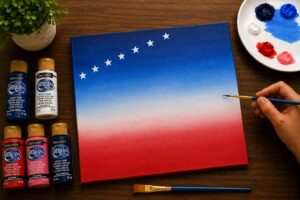
Stars instantly make the painting feel patriotic, but thankfully they are much easier to create than most beginners expect. If painting star shapes sounds intimidating, there is a very simple shortcut that still looks beautiful. Dip the eraser end of a pencil into white paint and press dots across the blue section of the canvas. From a distance, the dots resemble glowing stars and create a soft festive effect without requiring detailed brushwork.
If you want actual star shapes instead, use a thin detail brush. Start by painting a tiny plus sign. Then add two diagonal lines crossing through the center to create an easy eight-point star shape. Try spacing the stars evenly across the blue section so the canvas feels balanced and not overcrowded. Around 10 to 13 stars usually looks best for a beginner-sized canvas. Do not worry if some stars look slightly uneven. Handmade paintings often look more charming when every detail is not perfectly identical.
Creative beginner art projects remain popular because of collections like 25 Easy Art Projects for Kids That Look Amazing on Pinterest, where simple ideas produce surprisingly impressive results.
Step 3 : Create the White Stripes
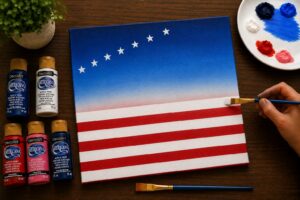
This is usually the step where the painting suddenly starts looking polished and structured. Take several strips of painter’s tape and place them horizontally across the red section of the canvas. Space them out evenly and press the edges down firmly so paint does not bleed underneath. Using your flat brush, paint white stripes in the open spaces between the tape strips. Work slowly using smooth horizontal strokes. Thin layers almost always look cleaner than thick heavy ones, so do not overload the brush with paint.
If the first layer appears slightly patchy, let it dry for a few minutes and apply a second thin coat instead of one thick layer. Once the paint is slightly dry but still soft, carefully peel the tape away at a downward angle. Watching the crisp white stripes appear underneath is honestly one of the most satisfying parts of the whole project. The clean lines instantly make the canvas look sharper and more professional, even for complete beginners.
Patriotic stripe patterns are also featured in 25 Patriotic Paper Craft Ideas For Festive Fourth of July Décor, making it easy to coordinate multiple holiday decorations.
Step 4 : Paint Fireworks Bursts
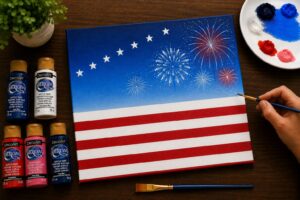
Now comes the part that really brings the painting to life. Fireworks add energy, movement, and that unmistakable Fourth of July atmosphere. Choose a corner or open space on the canvas for your first fireworks burst. The upper right corner usually works especially well because it balances the stars nicely. Dip a thin brush into yellow paint and pull short lines outward from one center point like a tiny exploding sun. Do not worry about making the lines perfectly even because fireworks naturally look energetic and messy.
Once the yellow burst is finished, switch to white paint and add extra lines between the yellow ones. This layering effect helps the fireworks look brighter and fuller. Tiny dots around the outer edges also create a sparkling effect that makes the fireworks feel more realistic. You can stop at one burst or add smaller fireworks in other corners using red, blue, or white paint. Multiple bursts make the painting feel more dynamic and balanced overall. The best part is that fireworks are incredibly forgiving. Even messy brushstrokes often end up looking intentional and dramatic once everything comes together.
Firework-inspired designs fit perfectly alongside 19 Patriotic Rock Painting Ideas That Are Easy Enough for Kids, another beginner-friendly project that celebrates the holiday with bold patriotic colors.
Step 5 : Add Small Final Details
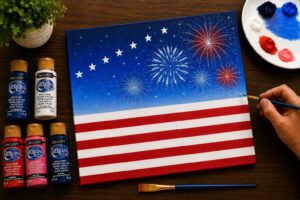
This step may seem small, but little finishing touches often make the biggest difference in beginner paintings. Using your thinnest brush and black paint, lightly outline some of the stars. This tiny detail helps them stand out more sharply against the blue background. You can also add scattered white dots around the fireworks to make the sky feel fuller and more magical. Those small details create extra depth without overcrowding the painting. If you want, paint “Happy 4th” or “USA” near the bottom corner of the canvas using simple white lettering. Keep the words small and clean instead of trying to create fancy calligraphy.
Take a few steps back from the canvas and look at it from across the room. This helps you notice empty spots or balance issues more clearly. If one area feels too empty, add another small star or spark. If everything already looks balanced, stop there. One of the biggest beginner mistakes is overworking a painting after it already looks finished.
Creative finishing touches often make the biggest difference in projects like 13 Fourth of July Resin Tray Ideas for Gorgeous Party Décor, where small details help elevate the final result.
Common Beginner Mistakes to Avoid
- Using Too Much Paint: A lot of beginners accidentally overload the brush with paint. Thick layers take longer to dry and can make the canvas look uneven or messy. Using smaller amounts gives you much better control and cleaner brushstrokes overall.
- Rushing Between Layers: Painting over wet sections too quickly usually causes colors to smear together into muddy-looking patches. Acrylic paint dries fairly fast, so giving each section a few extra minutes to dry really helps.
- Trying Too Hard to Make Everything Perfect: This is probably the biggest mistake beginners make. Patriotic paintings actually look better with a little texture and personality. Slightly uneven stars or visible brushstrokes often make the painting feel warmer and more handmade.
- Adding Too Many Details: Simple designs almost always look stronger and cleaner than overcrowded ones. A few stars, stripes, and fireworks are already enough to make the painting feel complete and festive.
Easy Ways to Make Your Painting Look Better
- Use Thin Layers of Paint: Thin coats dry faster, blend more smoothly, and usually create cleaner color coverage. Building up color slowly almost always gives the best result.
- Keep Your Brushes Clean: Rinse brushes fully between colors so the red, white, and blue stay bright instead of blending into dull muddy shades.
- Step Back Frequently: Looking at the canvas from across the room helps you notice balance problems much more easily than staring at it up close the entire time.
- Add Tiny Highlights: Small white highlights on stars or fireworks instantly make the painting feel brighter and more dimensional.
- Embrace Texture: Visible brushstrokes can actually make beginner paintings feel more artistic and interesting instead of flat or overly perfect.
These same beginner-friendly painting principles are useful when creating How to Make a Patriotic Resin Tray With Red, White and Blue Flowers, where thoughtful color placement creates a polished patriotic look.
Why This Makes a Great Holiday Tradition
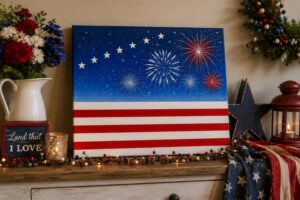
There is something really special about decorating your home with things you made yourself. Handmade paintings hold memories in a way store-bought decorations usually cannot. Over time, these canvases become more than just holiday crafts. They turn into reminders of different summers, celebrations, cookouts, fireworks shows, and moments shared with family or friends.
Painting can also become a relaxing yearly tradition. Every Fourth of July, you can try a slightly different design, experiment with new techniques, or improve small details naturally without putting pressure on yourself. Looking back at older canvases later can actually feel surprisingly rewarding because you can clearly see your creativity and confidence growing over time.
Many families enjoy pairing painted artwork with decorations like How to DIY a Gorgeous Paper Rosette Wreath for July 4th, creating a home filled with handmade holiday décor.
Final Thoughts
Painting a Fourth of July canvas is one of those projects that feels intimidating right up until the moment you actually begin. Once the brush touches the canvas, the pressure slowly disappears and the process becomes much more relaxing than stressful. One of the best things about beginner painting is that imperfections usually make the artwork feel more personal and charming. Slightly uneven stars, textured brushstrokes, and messy fireworks all add personality to the final result. That handmade feeling is exactly what makes it worth displaying proudly during the holiday.
Patriotic artwork often becomes part of a larger holiday decorating tradition alongside projects like 17 Fourth of July Clay Crafts That Double as Party Decorations, which help bring the same festive spirit into other areas of the home.
So do not overthink every tiny detail or compare your canvas to professional artwork online. Put on some music, enjoy the process, and let yourself experiment a little. Whether your painting turns out simple, dramatic, neat, or slightly messy, it is still something you created with your own hands. By the time the real fireworks begin outside, your own painted version of them will already be hanging proudly somewhere in your home. Honestly, that is a pretty great feeling.
Many homeowners enjoy extending the patriotic theme with projects such as How to Make a Patriotic Macramé Wall Hanging for 4th of July, which adds texture and visual interest to walls and covered porches. The important thing is simply to start. Once you do, you may discover that creating the decorations becomes just as enjoyable as celebrating the holiday itself.
